Trinomics ondersteunt Ministerie van Economische Zaken met review van het beleidsontwerp voor de SDE++ regeling

Met het aannemen van de klimaatwet heeft Nederland zich gecommitteerd aan een reductie in broeikasgasuitstoot van 49% in 2030. Om dit doel te realiseren zijn grootschalige veranderingen nodig in alle sectoren in de economie en om deze veranderingen te stimuleren wordt een breed scala aan nieuwe beleidsinstrumenten ingezet. Één van de centrale beleidsinstrumenten in het…

Presentation “Energy Technology Dependence in Europe today and tomorrow” at Berlin Energy Forum

On Thursday 24 October, Trinomics senior associate Stephan Slingerland will give a presentation at the German-French Energy Forum “Security of Supply in a European Context”. The presentation, entitled “Energy Technology Dependence in Europe today and tomorrow”, will showcase the project on Energy Technology Dependence carried out by a consortium led by Trinomics for the European…

Technical assistance to develop a tool for assessing energy efficiency policies and measures

Will the energy efficiency policies in place be enough to reach the 2020 and 2030 targets? Energy efficiency is the key pillar of all recent EU legislation, which has been stated in the form of the Energy Efficiency First Principle. Many studies have shown that energy efficiency offers the most cost-effective options for meeting global…

Impact assessment study on EU institutional partnerships under Horizon Europe: Clean Hydrogen

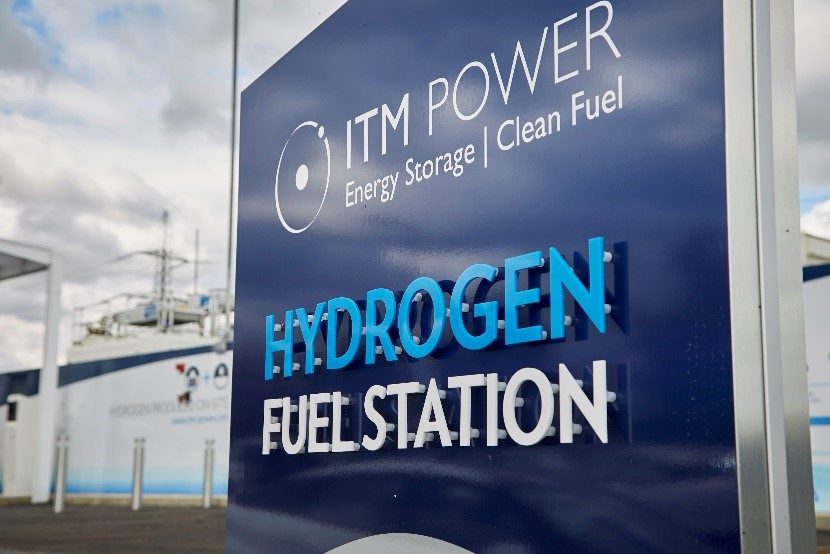
Can an institutionalised partnership effectively promote the deployment of hydrogen technologies in power, industry and transport? The Fuel Cell and Hydrogen Joint Undertaking (FCH 2 JU), part of the EU’s Horizon 2020 framework since 2014, was created to explore hydrogen’s potential role in a cleaner energy system for Europe and to organise and consolidate research…

MDB Climate Finance Methodology Consultancy

How can we strengthening the guidance to track climate mitigation finance? Since 2011, the Multilateral Development Banks (MDBs) joined forces to develop a methodology for tracking their climate finance contributions in a consistent, comparable and transparent manner and started to publish the ‘Joint Report’ on MDB Climate Finance on an annual basis. In 2015, MDBs…

New vacancy: Senior Consultant Circular Economy

Trinomics is looking for a self-motivated Senior Consultant Circular Economy with a rigorous background in and knowledge of circular economy and waste management policies and practices in the European context, strong economic skills and analytical capacity, an eye for detail, the willingness to go that extra mile if necessary, and a desire to work within…

To what extent can hydrogen technologies lead to increased jobs, growth, environmental sustainability and energy security?

Trinomics, together with LBST, have been selected to carry out an assignment commissioned by the Fuel Cells and Hydrogen Joint Undertaking (FCH JU). The aim of the study is to assess the opportunities in terms of jobs, growth, environmental sustainability and energy security through the inclusion of hydrogen energy technologies in the National Energy &…

New job openings at Trinomics

Would you like to join Trinomics team? We have two new job openings for a Consultant in Climate Change and a Senior Consultant in Climate Change. You can find out more details about our new vacancies in the section Work for us, including full descriptions of the required profiles.

Trinomics advises the Dutch Ministry of Economic Affairs and Climate Policy on the subsidy scheme to stimulate CO₂ reducing projects

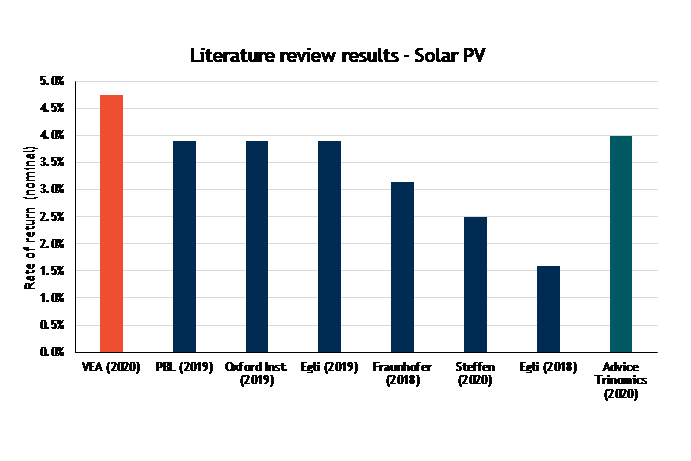
Trinomics has been selected by the Ministry of Economic Affairs and Climate Policy to review the options to expand the Stimulation of Sustainable Energy Production subsidy scheme (SDE++). The existing subsidy scheme (SDE+) stimulates the deployment of renewable energy by providing a feed-in premium. This is in line with its objective to increase the share of…

Opportunities for the inclusion of hydrogen technologies in the National Energy & Climate Plans

To what extent can hydrogen technologies lead to increased jobs, growth, environmental sustainability and energy security? The transition to a carbon-neutral economy by 2050 requires drastic changes in Europe’s energy system. Electrification and sector coupling, including end-use sector coupling and cross-vector integration, are expected to play a pivotal role in the decarbonisation of the European…

Review of the methodology for the extended Dutch Sustainable Energy subsidy scheme (SDE++)

Will the proposed new subsidy scheme for reducing greenhouse gas emissions (SDE++) work in practice? In May 2019, the Netherlands adopted the national Climate Law which transposes the international Paris Agreement into national climate goals. Following the Climate Law (klimaatwet), the Netherlands is committed to reduce its Greenhouse Gas (GHG) emissions by 49% compared to…

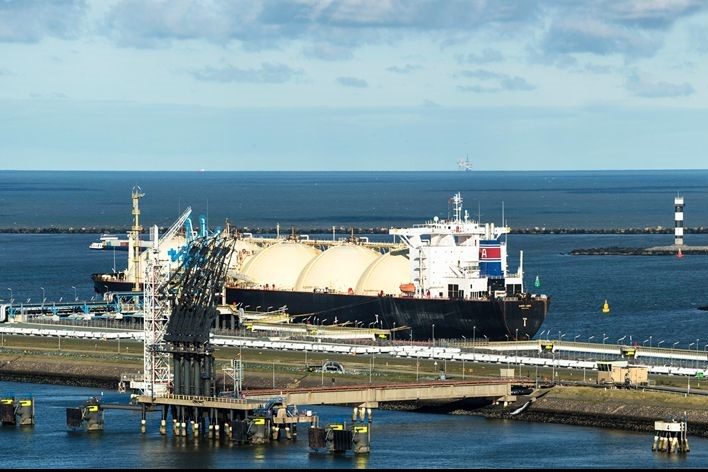
Gas market upgrading and modernisation – Regulatory framework for LNG terminal

Can an efficient LNG market ensure security and diversity of energy supply throughout Europe? LNG imports enhance the diversity of supply and competition in the EU gas market. LNG import and regasification infrastructure is largely available throughout Europe, but its current utilization level is low. The EU strategy on LNG and gas storage (adopted in…

The evaluation of the EU Biodiversity Strategy has begun

Biodiversity is essential for the functioning of ecosystems which we all depend on for our continued well-being. Despite this, habitat loss, diffuse pollution, exploitation of resources and climate change continue to erode ecosystems globally. As a result of these pressures, the EU adopted a Biodiversity Strategy in 2011 which seeks to protect, value and appropriately restore biodiversity and the ecosystem services it provides.…

Evaluation of the EU Biodiversity Strategy to 2020

How well is EU policy tackling biodiversity loss? This project will evaluate the progress made by the EU and its Member States towards meeting biodiversity targets. In essence, this involves analysing the strategic approaches and actions undertaken to tackle biodiversity loss. This will be achieved through assessing 5 main themes of analysis: whether the Biodiversity…

Learn more about the CCUS Projects Network: Sharing knowledge, transforming industry, reducing emissions

The CCUS Projects Network represents and supports major industrial projects under way across Europe in the field of carbon capture and storage (CCS) and carbon capture and utilisation (CCU). The European Commission recognises these technologies as crucial to achieving 2050 climate targets. With support from the Network’s Secretariat, our members will work together to share…

Vacancy: (International) climate finance specialist

As part of the expansion of our international business operations, we are now looking for an (international) climate finance specialist to join our climate team to support the cluster manager in further expanding Trinomics’ project portfolio in the area of climate mitigation/adaptation finance, climate finance strategies and (international) climate policy development and assessments (such as…

Vacancy: (International) climate adaptation specialist

As part of the expansion of our international business operations, we are now looking for an (international) climate adaptation specialist to join our climate team to support the cluster manager in further expanding Trinomics’ project portfolio in the area of climate adaptation (finance), climate resilience & vulnerability and (international) climate policy assessments. We are looking…

Exploring the potential for greater use of market-based instruments to help address environmental challenges in Europe

Policy makers have a range of different tools available in the policy toolkit to help deal with our environmental impacts, from ‘command and control’ regulation, to information provision to help people and businesses make more informed decisions.  One set of tools sets out to influence the decisions made by individuals, businesses and other actors that…

Environmental taxation and budgetary reform: internalisation of external environmental costs

Can we design and implement more market-based instruments to better address environmental challenges in the EU? Market-based instruments (MBIs) are policy instruments that use markets, prices or other economic incentives to achieve environmental outcomes.  When carefully designed in an appropriate context, they can be effective and efficient tools to deliver policy objectives. The project is…

Our “indispensable” natural forests: perspectives from the open public consultation on stepping up EU action on deforestation and forest degradation

Though the state of forests in the EU are generally positive (growing net forest areas, aboveground biomass stocks, good proportion of protected areas and independent verified forest management schemes), global deforestation is still a major concern. Much of this is caused by the international demand for products and commodities from forests. The EU is a large contributor to the  deforestation caused by this consumption, being a major global…

Trinomics joins team led by CowaterSogema to support the Green Climate Fund’s Communities of Practice

Trinomics is part of a consortium that has been selected as one of the lead providers of climate change expertise to the Green Climate Fund (GCF) under their program of support through Communities of Practice (CoP). Together with our partners CowaterSogema (lead), Climatekos, Viresco Solutions and ESSA Technologies, we will provide expertise in five core…

Open public consultation to assess impacts of harmonising smartphone chargers in the EU

The European Commission has launched an open public consultation to collect feedback on different policy measures to promote harmonisation of smartphone chargers. A new Memorandum produced by the industry in 2017 has raised concerns of market fragmentation and problems with charger interoperability, leading to consumer inconvenience and additional waste. Therefore, the Commission wants to explore…

Analysis and communication of progress on Resource Efficiency and Green Economy

Does the Green economy contribute to the protection of the Environment in the EU? The European Union has a wide variety of Environment policies, ranging from the management of water quality to circular economy and the restriction of the use of hazardous chemicals. In a new project for DG Environment, Trinomics will together with Ricardo,…

Study to identify and assess the feasibility of measures to enhance the impact of Directive 2006/66/EC

Powering up measures on the environmental performance of batteries and their waste. Batteries are becoming an increasingly utilised and important technology for contemporary society, ever since the development of Li-ion batteries. Now they are prevalently used within many IT applications, electric vehicles and portal electronic devices, electric storage, renewable energy and grid applications. Particularly for…

What is the economic impact of EU spending on the ITER fusion energy project?

The European Commission recently published a report prepared by Trinomics in 2018 which examined the economic value-for-money of EU funding of the ITER (International Thermonuclear Experimental Reactor) project. This showed that the EU spending through F4E (Fusion for Energy) of more than €2.2 billion to mid-2017, is having a significant beneficial impact on gross value added and jobs. The spending is supporting successful spin-off companies…

Europe relaunches CCUS knowledge exchange network to support industry’s climate action

A Europe-wide knowledge sharing network has received fresh funding from the European Commission to support and inspire major carbon capture, utilisation and storage (CCUS) projects in their efforts to deliver climate action. The revitalised European CCUS Projects Network, which launches its new website today (www.ccusnetwork.eu), will connect industry partners involved in real-life CCUS projects, which…

Study on energy costs, taxes and the impact of government interventions on investments in the energy sector

Trinomics leads update of flagship report on EU energy costs, taxes, subsidies and investments Trinomics led a consortium which carried out this high profile work for the European Commission’s DG Energy. This work built on the recent (2018) Costs and Prices study for DG Energy and further developed analysis of energy costs, taxes and subsidies.…

Analysis of the Open Public Consultation on stepping up EU action against deforestation and forest degradation

Can we step up our game to combat deforestation and forest degradation? This project focused on the analysis of data resulting from the Open Public Consultation (OPC) on deforestation and forest degradation, launched by the European Commission (DG ENV) on January 14th 2019 and which ran until February 25th 2019. All interested stakeholders were welcome…

Assessment of National Capacities for implementing climate adaptation & mitigation measures and development of a National Capacity Development Program for the Palestinian Authority

What are the priorities for the Palestinian Institutions in relation to climate mitigation and adaptation actions? The State of Palestine is impacted by climate change through expected rainfall decline and temperature increases, which will aggravate the problem of land deterioration and desertification – compromising the agricultural production and endangering food security. This may have socioeconomic…

Support to the EU Sixth National Report to the Convention on Biological Diversity, and follow-up

Assessing progress towards the EU and global biodiversity targets The Convention on Biological Diversity (CBD) is a multilateral treaty aiming to achieve the conservation of biodiversity, the sustainable use of its components, and the fair and equitable sharing of benefits arising from the use of genetic resources. The CBD requires all Parties to report regularly…

Support to the ex-post evaluation of the nuclear decommissioning assistance programme – energy window 2007-2013

What were the impacts and results of the energy-related projects funded by the Nuclear Decommissioning Assistance Programme (NDAP)? Upon accession to the EU, Bulgaria, Lithuania and Slovakia committed to prematurely shut down eight Soviet-designed first generation nuclear reactors that were not compliant with EU nuclear safety standards. To compensate these new Member States for the…

Meta-analysis of and development of a database for European environmental and climate policy evaluations

Better policy-making: how do EEA countries evaluate their environment and climate policies? The European Union and its Member states have a wide variety of environmental policies in place and the effectiveness of these policies is evaluated regularly. However, a comprehensive overview of the outcomes of such evaluations to obtain insight into which environmental policies work…

Trinomics advises EU negotiators on the environmental impacts of an EU-AUS and an EU-NZ Free Trade Agreement

In a world of increased protectionist taunting, the EU remains committed to an open economy and  enabling ever freer trade across the globe. Hereby, the European Commission’s ‘Trade for all’ communication highlights the EU’s commitment to guarantee that increased trade does not compromise on sustainability.   Negotiations for potential Free Trade Agreements (FTAs) with Australia and New Zealand…

Sustainability Impact Assessments for the Free Trade Agreement between the EU and Australia & New Zealand

How (environmentally) sustainable are potential FTAs between the EU and Australia/New Zealand?  After receiving final authorisation from the European Council in June 2018, External Trade Commissioner Cecilia Malmström officially launched negotiations for FTAs between the EU and Australia, and the EU and New Zealand. A Sustainability Impact Assessment (SIA) was requested for each negotiation table shortly…

Trinomics organized workshop at European Parliament to uncover the transformative potential of a just energy transition

On February 19th 2019, Trinomics organized a well-attended workshop at the European Parliament on the wider implications of the energy transition. Six speakers were invited to give nuanced perspectives on the subject matter, with ITRE Chair Jerzy Buzek providing opening and closing remarks.  The workshop’s presentations focused on: (i) the energy transition and opportunities for EU industries; (ii) the role of hydrogen as a decarbonization catalyst through its beneficial impact on energy flexibility, availability, and security; and, (Iii) the case of the energy transition…

Findings of Trinomics’ study on European Energy Technology Dependence will be discussed at the high-level EU Energy Diplomacy meeting

The European External Action Service (EEAS) works closely with Member States and the European Commission to implement an effective and coherent EU foreign policy, such as the external dimension of the Energy Union. On February 6th, the EEAS will hold its 10th EU Energy Diplomacy Experts Group Meeting, a follow-up of the EU Energy Diplomacy…

How did energy prices, costs and subsidies impact EU consumers in 2018?

The European Commission recently published their staff working document which drew heavily on the key findings from the study on European energy prices, costs and subsidies which was conducted by Trinomics. The report assesses the role of competition in the forming of wholesale & retail energy prices, analyses the impact of the energy bill on households’ budgets & industrial competitiveness and provides an overview of policy instruments such as energy taxation, subsidies and price regulation.  Among other findings, our study shows that while EU member states’ wholesale prices for electricity and natural gas are often close…

Evaluation of the Directive 2000/53/EC on end-of-life vehicles

How to improve EU policy on the treatment of end-of-life vehicles? Only a few decades ago, finding abandoned scrap cars along the roadside was relatively common in many European countries. End-of-life vehicles that are improperly handled can be hazardous for the environment and valuable materials are permanently lost when they are not collected, generating significant…

How to achieve a more balanced use of Europe’s largest Environmental funding scheme: LIFE?

The LIFE Programme, the only funding programme exclusively dedicated to environment and climate action, is ending in 2020. The Commission has proposed a new (LIFE) financial programme for the post-2020 Multiannual Financial Framework. In light of the results of the Impact Assessment accompanying Commission’s proposal for the new Programme, DG Environment wished to reinforce the…

Study on assessing the independence and effectiveness of National Regulatory Authorities (NRAs) in the field of energy

Are European energy NRAs effective and independent? The general objective of the study was to assess the independence of the national regulatory authorities in the field of energy and their effectiveness in performing key tasks in the following 12 Member States: Austria, Bulgaria, Croatia, Czech Republic, France, Germany, Greece, Hungary, Lithuania, Romania, Slovakia and Spain.…

Carbon Capture, Utilisation and Sequestration (CCUS) knowledge sharing and Demonstration Project Network

How can the EU successfully implement commercially viable and technologically sound Carbon Capture, Utilisation and Sequestration (CCUS)? The main objective of this assignment is to run the European CCUS Demonstration Project Network (as a continuation of the European CCS Demonstration Project Network) and to foster knowledge sharing among existing and emerging CCUS projects. The Network…

Achieving a just energy transition: industry, hydrogen & what can we learn from coal phase-out in Germany?

How can a just energy transition, with consideration of technological innovation and EU industry, be achieved and which lessons should we learn from Germany’s ongoing energy journey? The European Parliament (EP) is a strong supporter of a common energy policy addressing competitiveness, security and sustainability issues. It calls for coherence, determination, cooperation and solidarity between Member States in facing current and future challenges in the internal…

How effective was ECF’s Energy Efficiency Programme?

How effective was ECF’s Energy Efficiency Programme? In 2013, Trinomics independently evaluated the Energy Efficiency Programme of the European Climate Foundation (ECF). ECF is Europe’s largest grant-making foundation focused exclusively on mitigating climate change. ECF’s Energy Efficiency Programme Strategy pursues a number of strategic initiatives to increase energy efficiency in the European economy. The Programme…

Support to the Commission for the determination of the ETS Carbon Leakage List after 2020

Which European sectors are deemed to be exposed to Carbon Leakage under the EU ETS? Trinomics led this project on one of the most influential components of the EU’s Emission Trading System (ETS): The Carbon Leakage List (CLL). Carbon Leakage occurs if companies transfer their production from inside EU countries towards regions with less strict…

How do consumers engage in the Circular Economy?

The European Commission has recently published a behavioural study on consumers’ engagement in the circular economy, which provides policy-relevant insights to assist with the implementation of the EU Circular Economy Action Plan. The study found that consumers were generally willing to engage in circular economy practices, but actual engagement was rather low. While a majority…
Trinomics evaluation and country fiches published by DG CLIMA as it evaluates the EU’s strategy for adaptation to climate change

Report: adapt_strat_eval_report_en (3 MB) DG Climate Action published on 12th November 2018 its evaluation of the EU strategy on adaptation to climate change – see here. This evaluation was underpinned by work carried out by Trinomics (as part of a team led by Ricardo E&E and also including IEEP and Wageningen Environmental Research). The evaluation…

Trans-European gas infrastructure in the light of the 2050 decarbonisation targets

Report: Final gas infrastructure (2 MB) The required sharp decrease in CO2 and other greenhouse gas emissions by 2050 may drastically reduce the share of natural gas in the European energy mix. In 2018 Trinomics prepared a study for DG Energy on the role of trans-European gas infrastructure in the light of the 2050 decarbonisation…