Quest for the ‘sweet spot’ – support to the MTE of the UK’s Renewable Energy Performance Platform (REPP) 

The Renewable Energy Performance Platform (REPP) was set up by the United Kingdom government, the European Investment Bank (EIB) and the United Nations Environment Programme (UNEP) in December 2015 with a generous budget of £48 million and is set to run until 2020. In essence, the platform serves as a project preparation facility (PPF) seeking to get promising…

Policy dialogue to support investment in energy efficiency in residential buildings in Ukraine

Helping Ukraine develop energy efficiency in buildings legislation in line with the Energy Performance of Buildings Directive (EPBD) The overall aim of this technical assistance assignment was to amend components of the legislative and regulatory framework in Ukraine in order to provide improved incentives for investments in energy efficiency in residential buildingsThe objectives of this…

The role of sector coupling in the decarbonisation of the EU energy system

Sector coupling can improve the robustness of the energy system and reduce the costs of decarbonisation The EU strives to have a zero-emission economy in 2050. Achieving this ambitious objective requires a complete decarbonisation of the European energy system, which needs to be realised without compromising the security of energy supply and while keeping energy…

Ex-ante impact assessment of the post-2020 financial instrument for environment and climate (LIFE) – extension

How could a Network of National Contact Points support MS participation in the LIFE programme? Launched in 1992, LIFE is the only EU funding programme dedicated exclusively to the environment and climate action. Its objective is to contribute to the implementation and development of EU environmental and climate policy by co-financing projects with European added…

Support for the development of a national energy efficiency action plan for Belarus

What are the reporting obligations in the European energy acquis? The overall aim of the project is to assist the Department for Energy Efficiency of the State Committee for Standardization of the Republic of Belarus (the “Department”) to develop the first NEEAP for Belarus. This NEEAP will allow Belarus to identify the required steps and…

The ClairCity Skylines online game for Amsterdam has been launched.

One of the most awaited outputs of the large H2020 European project ClairCity (Citizen-led air Pollution Reduction in Cities) led by Trinomics has been launched: The ClairCity Skylines online game for Amsterdam. The game (developed by UWE Bristol) is available for Android or iOS – you can download it for free here: http://www.claircity.eu/amsterdam/game-app-2/ As player you are tasked with…

Mid-term evaluation of Renewable Energy Performance Platform (REPP)

Does the Renewable Energy Performance Platform hit its ‘sweet-spot’? The objective of this assignment was the execution of a mid-term evaluation of the REPP. More specifically, the purpose of this mid-term evaluation (MTE) assignment was to support learning for BEIS on ‘what is working, for whom and in what context’. The MTE provided BEIS with…

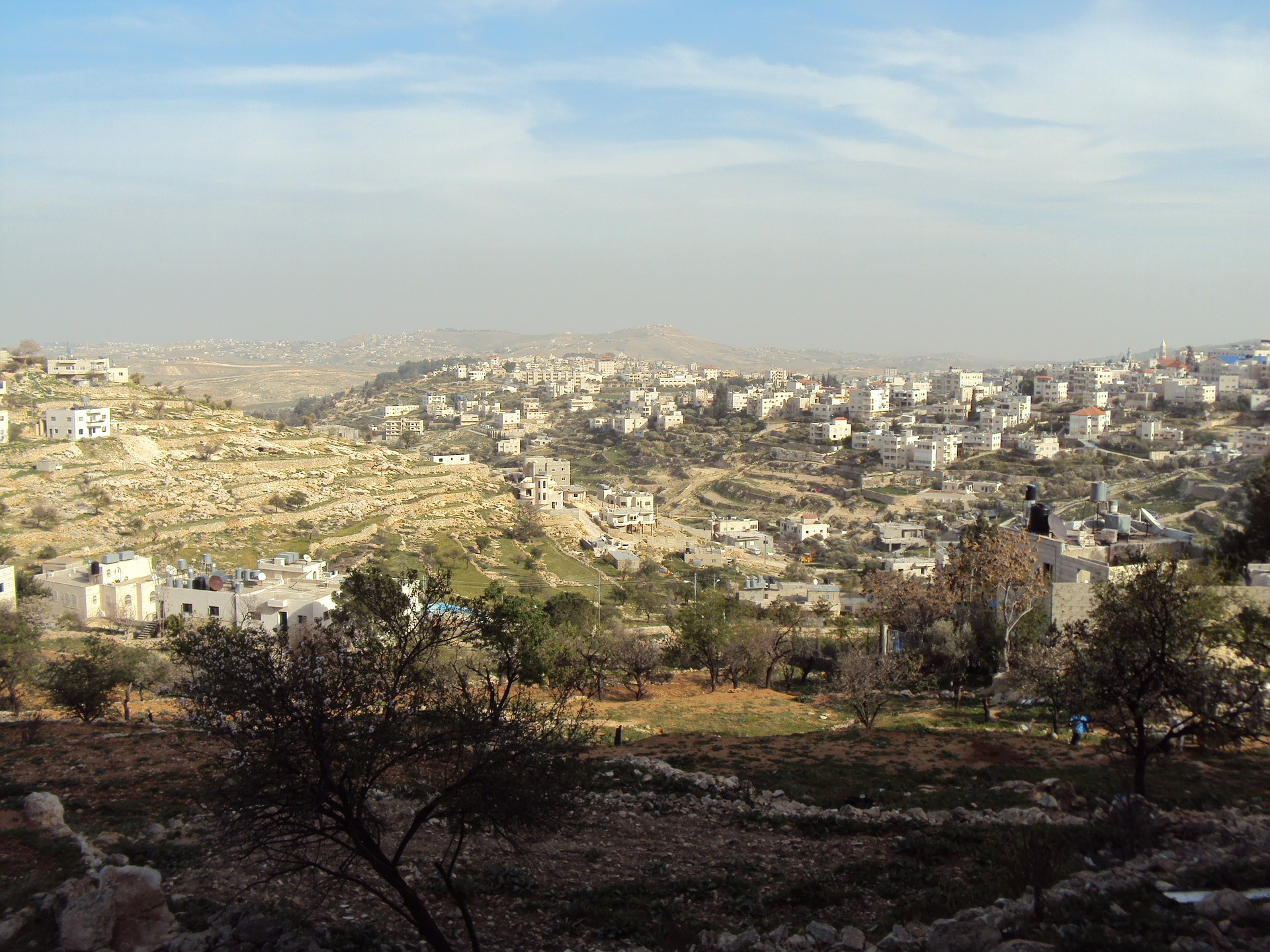
Economic impact of climate change in Palestine

What are the economic impacts of climate change on the Palestinian economy? This assignment was a deliverable of national activities implemented in Palestine within the framework of the ClimaSouth Project. The overall objective of ClimaSouth was to assist partner countries’ transition towards low-carbon economies whilst building climate resilience, thereby protecting the foundation and exploiting opportunities…

Development of a MRV system to support the implementation of NDC’s to the UNFCCC for Barbados and St Vincent and the Grenadines

How to measure progress on NDC commitments under the Paris Agreement? The long-term objective for Barbados and St Vincent and the Grenadines (SVG) is to operate a sustainable and fully functional Monitoring, Reporting and Verification (MRV) system that underpins its decision making and engagement processes on climate action (GHG inventory compilation, mitigation and adaptation) and…

Development of conceptual framework for MRV within Montenegro’s second biannual update report (BUR)

How to measure progress on NDC commitments under the Paris Agreement? The overall goal of this assignment is to assist the Government of Montenegro, in particular the Ministry of Sustainable Development and Tourism (MSDT), in mainstreaming and integrating climate change considerations into national and sectorial development policies. There are a large number of stakeholders that…

Support for updating the existing MRV modalities under the UNFCCC

Paris Agreement: What will the Transparency Framework look like? The Paris Agreement’s goal is to establish a united global response to the threat of climate change. The mobilisation of rapid effective action needed under the Paris Agreement (PA) will require strong collaboration between Parties and investment decision makers (including multinational businesses, cities and regions). The…

Supporting analysis for an Impact Assessment on the future funding of EU participation in ITER activities

How is the EU contribution to the ITER project best provided in the future? The world’s most ambitious endeavour to move nuclear fusion towards commercial exploitation is the design and construction of the ITER facility at Cadarache, in the south of France. There are seven parties participating in the ITER project: the European Union (including…
The Dutch energy covenant: Implications for energy market balancing and flexibility mechanisms

How could the Netherlands deal with the increasing need for flexibility in the Dutch power market? Given the rapidly increasing share of variable renewable electricity sources like solar and wind, and the policy reactions to this trend in many neighbouring EU Member States to ensure grid-stability and security of supply, the report examined the need…

Evaluation Dutch ‘Topsector Energy’

Has the Dutch ‘Topsector Energy’ been following the right approach in reaching their intended goals? Trinomics, in collaboration with CE Delft (project lead partner), has evaluated the performance and future directions of the Dutch ‘Topsector Energy’ (TSE). In this TSE Programme set up by the Dutch government, public research institutions and private companies are cooperating…

What was the impact of the TEN-E Regulation on Europe’s energy networks and the progress of trans-European energy infrastructure projects?

Report: Evaluation of the TEN-E Regulation (4 MB) In 2017 we led the evaluation study of the Trans-European Energy Networks (TEN-E) Regulation, carried out in collaboration with Enerdata, DNV GL and Spark. The TEN-E Regulation identifies priority corridors and thematic areas of trans-European energy infrastructure and provides guidelines for the selection of Projects of Common…

Support to public consultation on long-term EU GHG emission reduction strategy

Looking towards 2050: what do stakeholders think about an EU long-term emission reduction strategy? The objective of this project was to assist the European Commission in preparing the long-term greenhouse gas emissions reduction strategy before the 24th session of the Conference of the Parties (COP24), taking place in Katowice in December 2019. The strategy was…

Supporting the implementation of Target 2 of the EU Biodiversity Strategy

Provision of technical support related to Target 2 of the EU Biodiversity Strategy to 2020 – Maintaining and restoring ecosystems and their services The objective of this contract is to provide technical support to the Commission Services in the development and implementation of actions under Target 2 of the EU Biodiversity Strategy, which focuses on…

Assessing the knowledge base on society’s dependence on natural capital in support of SOER 2020

How does natural capital benefit the economy and society? The objective of this study for the European Environment Agency (EEA) was to review existing evidence on society’s dependence on natural capital (i.e. biodiversity, ecosystems and their services). The study’s findings will feed into the next edition of the EEA’s European State of the Environment Report (SOER)…

Urban adaptation finance case studies

What practical examples are there regarding financing mechanisms for urban climate adaptation? The objective of this project was to contribute to the EEA’s work on urban adaptation, by providing practical examples of urban climate adaptation funding mechanisms. In total 10 cases were discussed in detail. The selection of cases considered to reach spread concerning: financing…

Technical assistance to the NER300

Providing technical assistance for the implementation of the NER300 Programme catalysing the development of low-carbon technologies The European Union’s main energy strategy documents – Energy 2020 and Energy Roadmap 2050 – emphasize the need to deploy low-carbon technologies such as carbon capture and storage (CCS) and renewable energy technologies (RES) to reach the EU’s 2020…

Assessing the status of electrification of the road transport passenger vehicles

What is the impact of increasing electric vehicle car fleets on the European energy system? Transport is a major source of greenhouse gas (GHG) and air pollutant emissions in Europe. Despite a significant improvement of the energy-efficiency of road vehicles, the GHG emissions of the European transport sector further increased due to a continuous growth…

Study on financing clean energy innovation completed

Trinomics and its partners have completed the study ‘Building the investment community for innovative energy technology projects’ for the European Commission, DG Energy. The overall objective of this study was to contribute to increasing the volume of investment in innovative energy technology solutions by developing investment partnerships (i.e. the investment community). The realization of such…

Analysis and aggregation of Member States’ information on climate finance

What do Member States spend on climate finance for developing countries, and how could methodologies and reporting be improved? Article 16 of the EU greenhouse gas Monitoring Mechanism Regulation (MMR) requires Member States to annually report on climate finance contributions for developing countries. Methodologies and reporting on climate finance have been under continuous development in…

Building the investment community for innovative energy technology projects

How can we improve the investment community for innovative energy technologies? Research, innovation and competitiveness are pivotal to accelerate the EU energy transformation and reduce the cost of the energy transition. To help bringing innovative energy technology solutions to the market, the overall objective of this project was to increase the volume of investment in…

Study reveals that the circular economy can have a positive impact on employment in the EU

Report: Impacts of circular economy on policies on the labour market (5 MB) The transition towards a circular economy has been set in motion. National policy frameworks are being developed and the European Commission adopted the Circular Economy Package in December 2015. By 2018, several actions mentioned in this package have been adopted or initiated.…

Monitoring study published on the economic development of the collaborative economy in the EU

Report: Study to monitor the economic development of the collaborative economy at sector level in the 28 EU Member States (4 MB) Collaborative economy business models are growing strongly in Europe and are changing the lives of its citizens. More and more often, we share do-it-yourself equipment with neighbours we met via a smartphone app, rent…

Study to monitor the economic development of the collaborative economy in the EU

What is the current level of economic development of the collaborative economy in the EU? Collaborative economy business models are growing strongly in Europe and are changing the lives of its citizens. There is a strong growth potential for collaborative economy businesses, but they also face many regulatory barriers by challenging existing traditional ways of…

How to include energy finance in the current EU macroeconomic models?

In 2015, the European Commission launched a two-year project with the objective to improve the modelling of the interactions of European energy and climate policy within the real economy. This major project was led by Cambridge Econometrics and included E3Modelling and Trinomics as partners. In particular, the study aimed to extend two global energy-economy-environment models, to…

Handbook for developing domestic climate finance landscapes in Europe

How to set up climate finance tracking procedures in order to develop clear financial flow diagrams? To reach the ambitious climate and energy targets in Europe, financial flows need to be redirected to low-carbon and climate-resilience activities (i.e. climate finance). The ‘Clean Energy for All Europeans’ communication of the Commissions, depicts that for mitigation only,…

How much can the circular economy contribute to fighting climate change?

Quantifying the benefits of circular economy actions on the decarbonisation of the EU economy The circular economy has gained momentum in the political arena in the last few years. The European Commission has made the transition to a circular economy one of the key policy priorities in the EU, as it can bring a variety…

Trinomics reports on private climate finance mobilised by the Government of the Netherlands

For the third year in a row, Trinomics has supported the Dutch Ministry of Foreign Affairs in the analysis and reporting on private climate finance that has been mobilised by the Netherlands. The results are now published on the website of the Government of the Netherlands. The report is one of the background documents to the Annual Report of…

Next week Trinomics participates at the high-level panel discussion concerning the 7th Environmental Action Programme

As part of the evaluation of the 7th Environmental Action Programme (7th EAP), our colleague Rob Williams (senior expert on energy and the environment) will be speaking at a conference in Vienna concerning future EU environmental policy. He will participate as a panellist in the discussion on “State of Environment and Challenges for the next…

Decomposition analysis of emissions from large combustion plants

What were the driving factors behind the reduced emissions of key pollutants from large combustion plants (LCPs)? Between 2004-2015, the emissions of four key pollutants originating from large combustion plants (LCPs) in the EU have reduced. These reductions were driven by a range of different factors. This study carried out a decomposition analysis, which allowed…

Trinomics supports the government of El Salvador in its preparations to better access international climate finance

(For Spanish version, please scroll down) The Paris Climate Agreement saw the establishment of a new multilateral source of finance for projects directed at mitigating and adopting to climate change in developing countries: the Green Climate Fund (GCF). In the framework of the ‘GCF Readiness Programme’, formed subsequent to the fund’s creation by the United…

Establishment of an MRV framework for climate finance in El Salvador

Preparing El Salvador for (international) climate finance: development of a monitoring, reporting, and verification (MRV) system The Paris Climate Agreement saw the establishment of a new multilateral source of finance for projects directed at mitigating and adopting to climate change in developing countries: the Green Climate Fund (GCF). In the framework of the ‘GCF Readiness…

Ex-ante impact assessment of the post-2020 financial instrument for environment and climate (LIFE)

What will the post-2020 LIFE programme look like? As the current programming period of LIFE (2014-2020) is coming to an end, this study aimed to explore options for the design of a new LIFE programme. Launched in 1992, LIFE is the only EU funding programme dedicated exclusively to the environment and climate action. Its objective…

National approach and architecture for climate finance in El Salvador

Preparing El Salvador for (international) climate finance: drawing up a strategic roadmap and designing an inter-institutional architecture The Paris Climate Agreement saw the establishment of a new multilateral source of finance for projects directed at mitigating and adopting to climate change in developing countries: the Green Climate Fund (GCF). In the framework of the ‘GCF…

Future energy indicators for the European Environment Agency

What indicators best measure progress towards the EU’s energy objectives? This project involved the provision of assistance to the EEA in sourcing and analysing potential indicators to monitor progress towards EU energy policy objectives. The EEA considers updating its energy indicator set  to more fully cover the diverse and evolving set of objectives and make…