Competitiveness of low-carbon energy technologies

Assessment of examples of cooperative production, financing and use of low carbon technologies Ambitious climate action can revitalise local communities, create new business opportunities and pull innovation through into the market place. The aim of this report, led by Ricardo-AEA, was to illustrate and assess different bottom-up concepts for the cooperative production, financing and use…

Low-carbon transition in the energy sector

What is the impact of the current power sector on the transition to greener energy? The fossil fuel dependency of Europe’s energy infrastructure produces a great barrier to the transition towards a more secure, affordable and sustainable energy system. This report’s purpose was to assess the extent to which the thermal power sector in each…

Funding support to TI’s Latin-American chapters on climate finance integrity

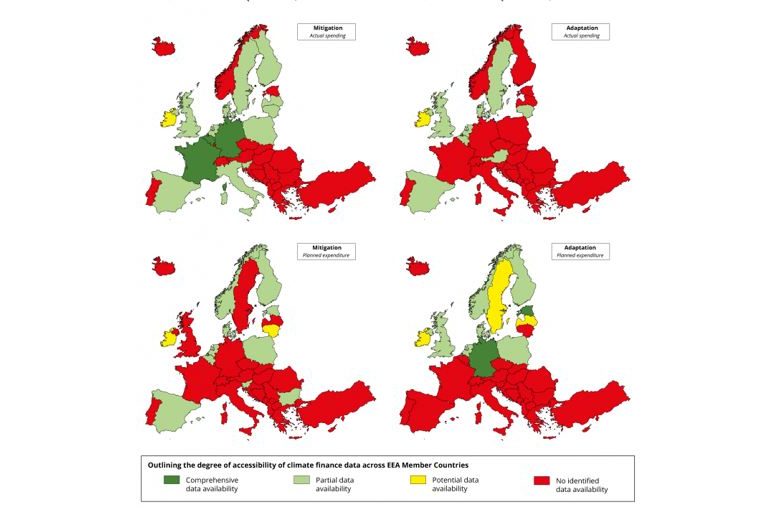
How can funding for tracking climate finance be obtained? The aim of this project was to provide support to the Latin America Chapters of Transparency International in identifying donors and accessing funding to fund a platform for tracking climate finance in Latin America. This platform would use the work done for Peru and Mexico so…

Assessment of agro-export SMEs’ perception of climate change and their adaptation strategies

Can cacao and coffee exporters in Peru cope with climate change? The study aimed at analyzing the level of awareness, vulnerability and capacity to adapt of agro importers to climate change impacts in Peru, one of the most vulnerable countries to climate change. The study was focused on coffee and cocoa export, studying the perceptions,…

Baseline Analysis on skills & jobs in sustainable energy

A switch towards sustainable energy in the Caribbean requires a skilled workforce This assignment aimed to provide a comprehensive picture of the current human capital and employment opportunities (and the needed skills) related to sustainable energy in Grenada and Saint Lucia. It included a baseline analysis of technical and professional capacity and an assessment of…

Energy Efficient Products Facility

Providing reliable information on EU energy efficiency product policy The Energy Efficient Products Facility (EEPF) aims to provide both information and guidance to different stakeholders including consumers, retailers and manufacturers regarding the EU energy efficient product policy and assistance for implementing measures under the Ecodesign and Energy Labelling Directives, the Tyre Labelling Regulation and the…
Assessing the implications of climate change adaptation on employment in the EU

How many jobs will be lost in the EU as a consequence of climate change? The objective of this project was to fill out gaps regarding the implications of climate change adaptation on EU employment and skills. As part of the future mainstreaming of climate change adaptation in EU policies, the results of this study…

Compilation of ‘transport success stories’ to reduce health and environmental impacts

What success stories exist for reducing the health and environmental impacts of transport in Europe? This study compiled cases of actions that can reduce environmental impacts of the transport sector in Europe. The report provides 12 examples of initiatives that aim to reduce the negative health and environmental effects of transport. The initiatives are described…

Fitness Check Evaluation and Impact Assessment of Planning, Reporting and Monitoring for the Energy Union

What are the reporting obligations in the European energy acquis? The purpose of this study was to map and analyse the distribution of the reporting obligation in the EU energy acquis. In the current EU energy acquis, planning and reporting obligations have been designed for each EU energy policy. They include numerous planning and reporting…

Mid-term Evaluation of the functioning and implementation of the emergency oil stocks Council Directive 2009/119/EC

Are Member States able to ensure petroleum oil stocks to consumers in case of emergencies? This project focused on the Directive 2009/119/EC, which gives the obligation to the EU Member States to hold emergency oil stocks aiming to ensure the continuity of supply of petroleum products to consumers in case of possible disruptions. It aimed…

Assistance for the identification of potential Projects of Common Interest (PCIs) in the field of electricity infrastructure

How can Projects of Common Interest (PCIs) be chosen? In 2012, the European Council and the European Parliament adopted an Infrastructure Regulation which established detailed guidelines for the selection of trans-European infrastructures as ‘Projects of Common Interest’ (PCIs). The PCIs, after being pre-selected by the European Network of Transmission System Operators for Electricity, are discussed…

Capitalisation of Energy Efficiency Projects from Interreg Ivc

How can barriers to energy efficiency improvements be overcome? This project entailed an extensive and detailed analysis of energy efficiency projects supported by the programme Interreg IVC of the European Union. This research tried to understand how to overcome barriers for these type of projects, namely: financial barriers (unwillingness from investors to fund them), institutional…

A new Research & Innovation agenda on climate change, resource efficiency and raw materials

How can the EU become a research and innovation leader in the fields of climate, resource efficiency and raw materials? Trinomics participated as one of the project partners within the FP7 RECREATE consortium, a policy support network that collected and analysed strategic information about medium and long term research and innovation trends and prospects in…

Support for BUILD UP Skills EU exchanges and analysis of construction skills

How successful has the EU BUILD UP Skills (Pillar II, 2015 – 2018) initiative to “upskill” construction workers with energy efficiency skills been? In the EU, the building sector accounts for nearly 40% of total energy consumption and over a third of CO2 emissions. Energy efficient building and renovation require knowledge and skills beyond business…

Climate policy and competitiveness impacts on Dutch industry

What will be the impact of stringent climate policy on chemistry, oil refinery, and the steel and cement sectors? While production in regions outside the EU is growing and energy prices and resource security are pressing issues for all industrial sectors, the potential impacts of strict climate policy differ considerably between the four sectors in…

Technological innovations and financial instruments for a circular economy

How can innovations for the circular economy in The Netherlands be promoted? The Dutch policy program “From waste to resource” aims to develop a circular economy. An important tool in this program is to stimulate innovations. This project assessed the technological innovations for three sectors (plastic, electronics and electronic appliances, and building) that are needed…

Public-Private Partnerships and inclusive green growth

Can Public-Private Partnerships contribute to inclusive green growth? Public-Private Partnerships (PPPs) have become increasingly popular in government policy. The expectation is that PPPs will enhance the efficiency of public good provisioning, improve local representation and increase the overall effectiveness of international cooperation and development aid. The Dutch Ministry of Foreign Affairs promotes partnerships in the…
The economics of shifting towards a sustainable mobility system over the 2030-2050 time period

Will the European transport sector be able to significantly reduce their emissions by 2050? The existing literature showed that the technology for achieving substantial reductions in the cost of transport for society are (to some degree) available in society today, even when these do not amount to more than mere prototypes or experimental projects at…

Literature review on GHG emissions trading and policy evaluations

To what extent has the EU ETS driven GHG abatement in the short and long term? The EU ETS has been subject to increasing levels of scrutiny as the policy instrument has been widely acknowledged to have underperformed in recent times (reflected by the weak price signal) as a consequence of external shocks (i.e. economic…

The green growth debate

Bringing green growth from popular concept to powerful action Green growth has become an increasingly popular term. It is an ambitious concept, aiming to conserve and improve the environment and achieve economic growth simultaneously. As such, green growth reconciles two interests that are usually viewed as contradictory: economic growth without environmental damage, and environmental enhancement…

The Fossil Dilemma of Rotterdam


Report: Fossildilemma (2 MB)


Report: Fossildilemma (2 MB) Trinomics works for TNO on a series of policy briefing papers on Dutch energy policy. In this series, a new paper has been published: ‘The Fossil Dilemma of Rotterdam’ (in Dutch). The paper discusses the greening strategy of Rotterdam harbor, the largest fossil fuel hub of Northwestern Europe. Its present strategy…

BUILD UP Skills Newsletter

You are welcome to subscribe to our newsletters prepared for the BUILD UP Skills initiative to receive the latest updates on the topic of construction skills in the field of energy efficiency and renewable energy sources. These newsletters will be issued on a regular basis, i.e. every two months and will discuss the latest developments…

Financing meaningful mitigation actions

Report: Financing meaningful mitigation actions (2 MB) The European Commission has published a report by Trinomics and Ricardo-AEA as part of the Scaling up Climate Finance in 2014 and beyond project. The report assesses the financing of meaningful climate mitigation initiatives in Chile, India, Vietnam, Ecuador and South Africa. The case studies focus in the transport and…

RECREATE policy brief published: Selling solar services as a contribution to a circular economy


Report: Recreate PB 2015 (3 MB)


Report: Recreate PB 2015 (3 MB) The FP7 Recreate project, in which Trinomics together with an international consortium is involved, has just published its first newsletter. The newsletter was written by Trinomics, based on a detailed case study produced by Wuppertal Institut. The theme of this newsletter is solar leasing, as one example of a…

Facilitating green skills and jobs in developing countries

Report: AFD Green jobs in developing countries (2 MB) AFD published a Trinomics report on facilitating green skills and jobs in developing countries. Green growth and green economy policies in developing countries have proven to have positive impacts on the countries’ labor markets and economic development, providing opportunities for green job creation, skills development and other…

Energy Union – Key Decisions for the Realisation of Fully Integrated Energy Market

Trinomics has been awarded a study contract by the European Parliament’s ITRE Committee, in collaboration with Aether Ltd and Energiaklub, to research and analyse key decisions for the realisation of a fully integrated energy market. The overall EU energy strategy is years determined by three main pillars: competitiveness, climate and security of supply. However, balancing…

Trinomics to support the European Environment Agency with research on Green Infrastructure and Flood Management

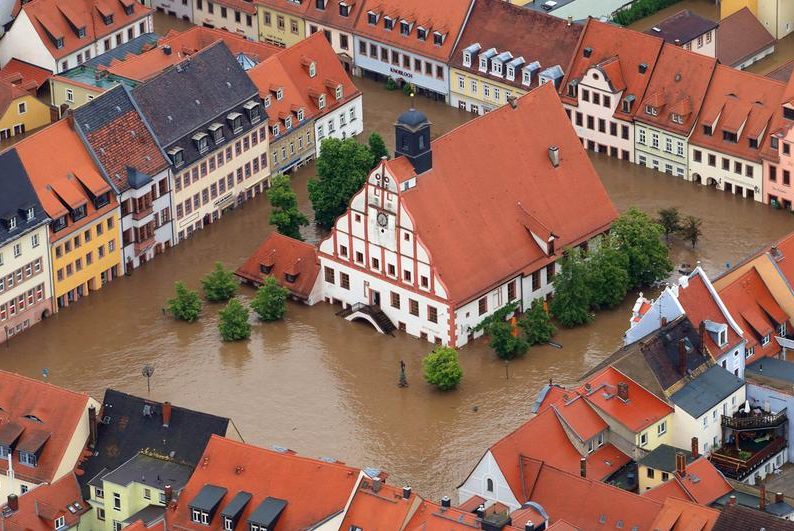
Trinomics has been awarded a study contract by the European Environment Agency (EEA), in collaboration with ARCADIS Belgium, to research and analyse the various options for reducing climate change induced risks of flooding with green infrastructure solutions (such as natural water retention measures (NWRMs)). Further, the research will that present evidence of whether natural solutions…

Book ‘Energy for green welfare’ published

The book ‘Energie voor groene welvaart’ (‘Energy for green welfare’), written by Trinomics senior consultant Dr Stephan Slingerland, is now available from Aeneas Publishers. The book discusses three trends in the global energy sector that currently take place at the same time: a sharp rise in the share of renewable energy, continuing investments in fossil…

Issue Brief published: Deep Sea Mining: Hitting the Bottom or Taking off?


Report: Deep Sea Mining 2015 (1 MB)


Report: Deep Sea Mining 2015 (1 MB) The Centre Of Expertise on Resources (COE-R) has been created by HCSS, TNO and Trinomics. It supports industry and government to timely and effectively anticipate strategic opportunities and risks related to the sustainable supply of resources. The focus is on abiotic and biotic (non-energy) resources, referring to metals,…

Trinomics will carry out the mid-term evaluation of Directive 2009/119/EC on emergency oil stocks

Trinomics, in collaboration with Technopolis, has been selected by the European Commission’s DG Energy to carry out the mid-term evaluation of Directive 2009/119/EC which requires EU Member States have to maintain minimum stocks of crude oil and/or petroleum products. This obligation was imposed first in 1968, and the legislation was revised in 2009 with the…
Trinomics is assessing the access-to-finance conditions for investments in Bio-based industries and in the Blue economy

Trinomics, in cooperation with EY (lead partner), has been selected by the European Investment Bank to assess the access-to-finance conditions for investments in Bio-based industries and in the Blue economy. The general purpose of the assignment is to gather information and evaluate the need and potential for dedicated risk finance instrument(s) at EU level to…

PROJECT OPPORTUNITY: Technical Assistance for the Mainstreaming of Environmental Sustainability, including Biodiversity, Climate Change and Disaster Risk Reduction

Trinomics is looking for key experts for a project opportunity. Purpose: The purpose of the technical support services to be provided under this contract is to ensure that environment and climate issues are adequately mainstreamed in the EU’s geographical programmes throughout the whole programme cycle (design, implementation, monitoring and evaluation) and that efforts and investments in…